



Set Up a Free Consultation
What Is a Chattel Loan, and What Do I Need to Know?
You’ve found the tiny home. Maybe you’ve even picked out the spot where it’ll sit. Then you start looking into financing and run into a word you’ve never heard before: chattel.
It sounds like something out of a history book, but it’s one of the most common ways tiny homes get financed. And once you understand it, a lot of the confusion around tiny home loans starts to clear up.
Here’s what a chattel loan is, how it’s different from a regular mortgage, and what you’ll want to have ready before you apply.
Contact RJ
What Is a Chattel Loan?
A chattel loan is a loan for something you own that can be moved, as opposed to land or a building that’s permanently attached to it. “Chattel” is just an old legal word for personal property. Cars, boats and RVs are often financed this way, and so are many manufactured and tiny homes.
With a chattel loan, the home itself secures the loan. The land it sits on isn’t part of the deal. That’s the big difference from a traditional mortgage, where the house and the land are financed together as real estate.
Chattel Loan vs. Mortgage: The Quick Comparison
|
Chattel loan |
Traditional mortgage |
|
|
What it finances |
The home only |
The home and the land together |
|
How the home is classified |
Personal property |
Real estate |
|
Closing process |
Usually faster and simpler, with fewer fees |
More steps, more paperwork, more closing costs |
|
Loan term |
Up to 25 years for park model tiny homes with US Tiny Loans |
Often 30 years |
|
Interest rate |
Usually higher |
Usually lower |
|
Down payment |
5% to 20% with US Tiny Loans, depending on your situation |
Varies by loan program |
Think of it like the difference between financing a car and financing a house. A car loan is quicker to set up, and the rate is usually higher. A tiny home on a chattel loan works a lot like that.
Why Tiny Homes Are Often Financed This Way
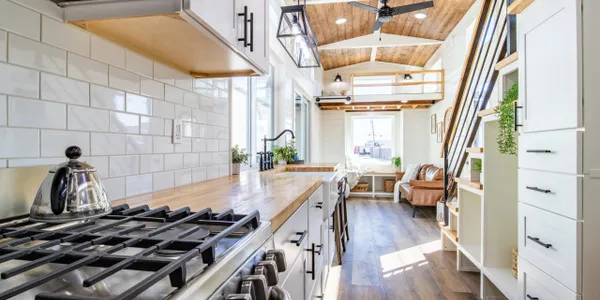
Most traditional mortgages are built for homes on a permanent foundation on land the owner holds. Many tiny homes don’t fit that box. They’re often placed on family land, set in a tiny home community, or built so they can be moved. Because the home is treated as personal property instead of real estate, a chattel loan is often the natural fit.
The upside is that you don’t have to buy land to own a tiny home. If you already have a spot, like a relative’s property or a lease in a tiny home park, a chattel loan lets you finance just the home.
Park Model or RV? Ask Your Builder First
Here’s a question most buyers never think to ask, and it can change your monthly payment by hundreds of dollars: what kind of tiny home is the builder actually selling you?
Tiny homes on wheels are built to one of two standards, and they look almost identical from the driveway:
- Park model tiny homes are built to the ANSI A119.5 standard. US Tiny Loans finances these with a chattel loan, with terms up to 25 years.
- RV-style tiny homes are built to the NFPA 1192 RV standard and registered as an RV. That’s exactly how they’re financed: like a vehicle, with shorter terms of around 12 years. US Tiny Loans does not finance RV-style tiny homes.
Here’s what that difference looks like on the same $100,000 home at a 9.75% rate:
|
Loan type |
Monthly payment |
|
Park model tiny home, 25-year chattel loan |
$891 |
|
RV-style tiny home, 12-year RV loan |
$1,180 |
Same house, same price, same rate, and nearly $300 more every month, just because of how it was certified. Over a year, that’s about $3,500.
So before you fall in love with a floor plan, ask your builder: “Is this a park model built to ANSI A119.5, or an RV?” The certification is on the paperwork, and a good builder will know the answer right away.
Example payments are for illustration only. Your rate and terms depend on your credit, down payment and the home itself.
What Lenders Look At
Even though a chattel loan is simpler than a mortgage, lenders still want to know you’re a safe bet. Expect them to look at:
- Your credit history. Not just your score, but whether you have active credit accounts with a track record. (We’ll cover why paying cash for everything can actually work against you in an upcoming article.)
- Steady income and work history. Lenders like to see consistency.
- Where the home will go. You’ll need to show you have a place to put it, like a signed Landlord’s Waiver from the owner of family land or a lease in a tiny home park. (Our guide, Where Can I Park My Tiny Home?, walks through both.)
- The home itself. The builder, the model and how it’s certified all matter, because the home is what secures the loan.
One thing that surprises a lot of buyers: approval can come quickly, but the home itself takes longer, because most tiny homes are built to order. We’ll walk through that timeline in a future article, too.
What Do I Need Up Front?
Short answer: probably not 20%.
You may have read that chattel loans need 20% down or more. That’s common in general guides, but with US Tiny Loans, your down payment depends on how you’ll use the home:
|
Your situation |
Down payment |
|
You don’t own a home right now, and the tiny home will be your primary residence |
5% |
|
You already own a home, so the tiny home counts as a second home |
15% |
|
“Buy For”: a family member co-signs for a relative who will live in the home |
20% |
What about the builder’s deposit? Many builders ask for a deposit before they start building. The good news: it isn’t an extra cost on top of your down payment. You can apply your down payment toward the builder’s deposit. Just keep a copy of the check and proof that it cleared your bank account, because we’ll need to document it.
When does the builder get paid? Most builders that work with US Tiny Loans start your build once RJ shows them your underwritten credit approval. Final approval comes during the build, once the builder provides the home’s paperwork: the Manufacturer’s Certificate of Origin, the build list, the title and your signed purchase agreement. The rest of the money moves at the end: once your home is built, the loan documents are signed and notarized through a title service, the funds are wired to the builder, and your home is delivered. (We’ll walk through the full timeline in an upcoming article.)
Before you apply, have these ready:
- Proof of income (recent pay stubs or tax returns)
- Recent bank statements
- Where the home will go (a signed Landlord’s Waiver for family land, or a park lease)
- The builder and model you’re considering, and whether it’s a park model (ANSI A119.5)
- Your down payment funds in your own account
- Proof of any builder deposit you’ve paid (a copy of the check and proof it cleared)
Not Sure Where You Stand?
Every buyer’s situation is a little different, and that’s okay. RJ has walked hundreds of buyers through this exact question, and he’s a tiny homeowner himself. Schedule a free consultation and he’ll help you figure out what you’ll need before you ever fill out an application.
Frequently Asked Questions
Information and programs are subject to change without notice. Not all customers will qualify.
Schedule Your Personalized Consultation with RJ
Please enter your information here, and RJ will reach out to you to set up your personalized Zoom consultation.A Chattel Loan is very different from a Mortgage.
Don't get caught up in the confusion and regulations of what counts as what. Talk to RJ about what you're looking for to avoid problems and delays.