



Set Up a Free Consultation
Park Model Buyer's Guide
Everything You Need To Know Before You Buy
If you've been researching tiny homes, you've probably come across park model RVs, or simply called "park models." At first glance, they can look very similar. They have attractive floor plans, full kitchens, real bathrooms, comfortable living spaces, and often cost much less than a traditional home.
Then the confusion starts.
One website calls them tiny homes. Another calls them park trailers. Someone else says they're recreational vehicles. You might even hear terms like manufactured home or modular home used in the same conversation.
Understanding the difference isn't just about learning the right terminology. It can affect where you can place your home, how you finance it, what it costs to insure, and whether you can legally live in it full-time. That's why we recommend learning the basics before you fall in love with a floor plan.
At US Tiny Loans, our goal isn't to convince you that a park model is the right choice. It's to help you understand your options so you can make an informed decision before spending tens or even hundreds of thousands of dollars.
This guide walks you through what a park model is, how it compares to other types of alternative housing, what it typically costs, how financing works, and some of the most common mistakes buyers make along the way.
Contact RJ
What Is a Park Model?
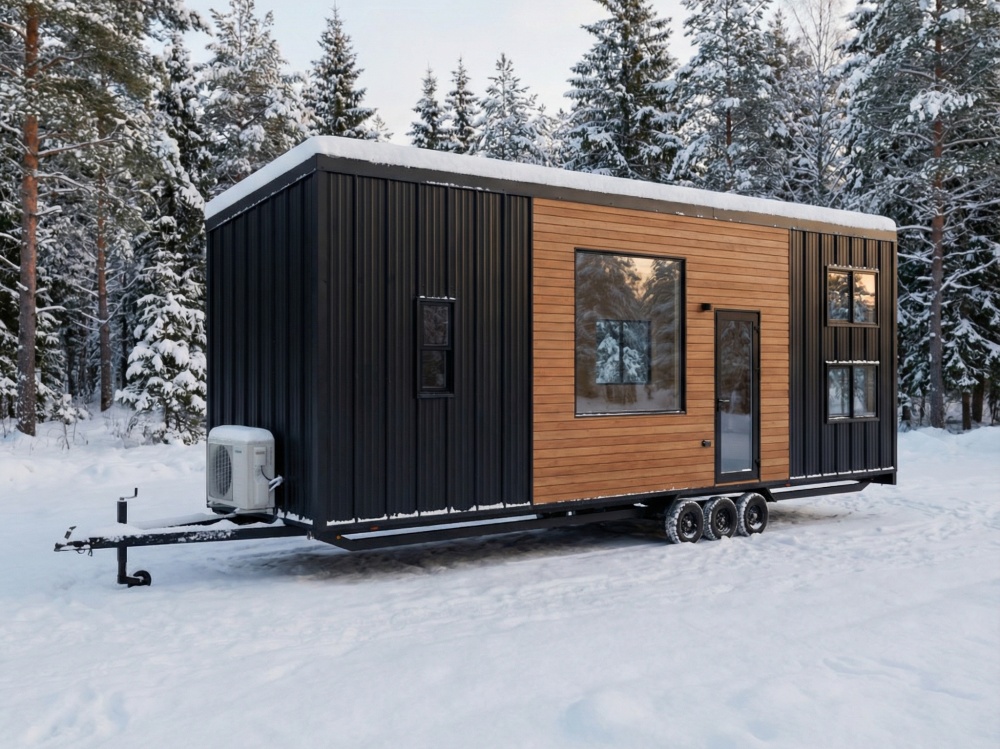
A park model, sometimes called a PMRV or park trailer, is a recreational vehicle designed for extended stays in one location. Unlike a travel trailer that is regularly towed from campground to campground, a park model is intended to be placed (or parked - hence the name) on a prepared site and connected to utilities for months or even years at a time.
Many people are surprised to learn that a park model is legally classified as a recreational vehicle rather than a house. That single distinction influences almost every part of the buying process, including financing, insurance, taxation, and where the home can be placed.
Most park models include everything you'd expect in a traditional home:
- A full kitchen
- A bathroom with a shower
- One or more sleeping areas
- A comfortable living room
- Heating and air conditioning
- Residential-style appliances and finishes
Although they're compact, many feel surprisingly spacious because of their wider floor plans and open layouts.
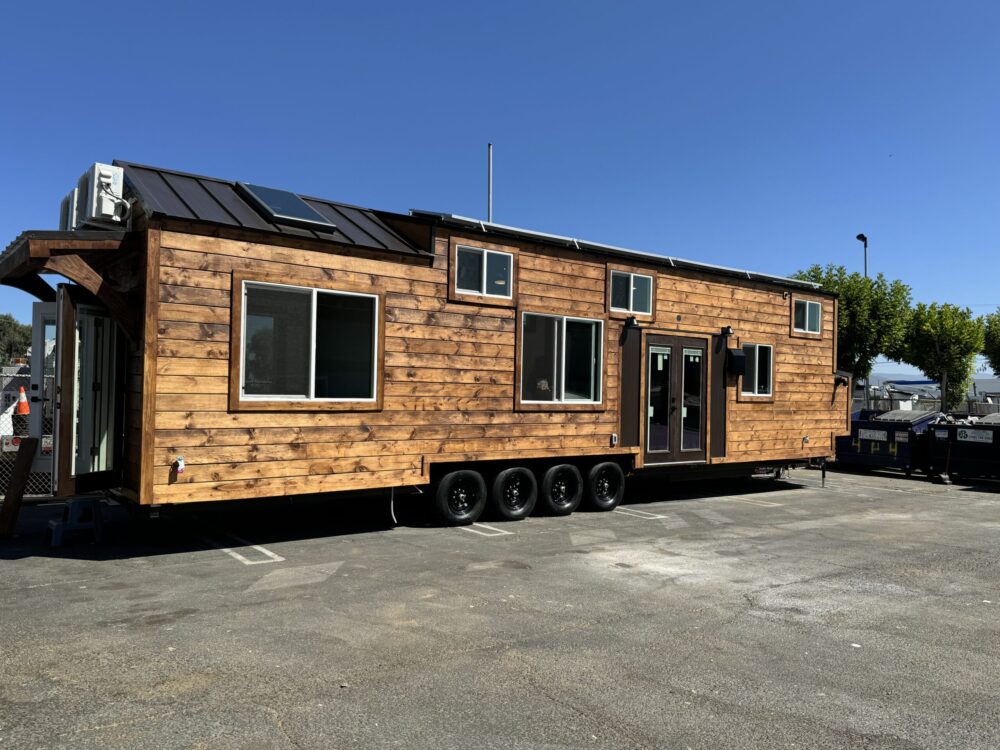
Park models are built to the ANSI A119.5 construction standard, which is the national standard for recreational park trailers. Unlike most tiny homes on wheels, which are typically about 8.5 feet wide so they can be transported on public roads without special permits, park models are commonly between 12 and 15 feet wide. That additional width creates a much more open, residential feel, but it also means they require professional transportation and wide-load permits when moved. Most owners move a park model only once, from the manufacturer or dealer to its permanent location.
Because a park model is wider and heavier than a typical towable RV, relocating one is a specialized project involving professional transport companies, permits, route planning, and setup costs.
It's more accurate to think of a park model as a semi-permanent home rather than something you'll tow from place to place.
How Park Models Compare to Other Types of Housing
The most important thing to understand is that not every small home is built under the same rules, and those differences have real consequences for financing, insurance, placement, and taxes.
Park Models vs Tiny Homes on Wheels (THOWs)
From the street, you might not notice much difference between a park model and a tiny home on wheels (THOW). Both are compact, and both can have beautiful kitchens, full bathrooms, lofts, and high-end finishes. The important differences are behind the walls and underneath the home.
A park model is built to ANSI A119.5 standards. A tiny home may follow ANSI 119.2 standards, carry NOAH certification, or be built to residential codes such as IRC Appendix Q. Unlike park models, there isn't one universal standard for tiny homes, which means more variation in how they're financed and where they can be placed.
Some tiny homes are designed for off-grid living with solar power, composting toilets, and water storage. Others are intended to function like traditional homes with permanent utility connections. If you're planning to place a home in an established RV resort or retirement community, a park model may be the better fit. If you need something that can travel more frequently or support off-grid living, a tiny home on wheels might make more sense.
One important caution: two homes can look nearly identical online but qualify for completely different financing, insurance, and placement options because they were built under different standards. Before you decide which home you love, make sure you understand how it's classified.
Park Models vs. Manufactured Homes
A manufactured home is built to the federal HUD Manufactured Home Construction and Safety Standards. Unlike a park model, it's intended to function as permanent housing and is often installed on owned land or in manufactured home communities. Manufactured homes are generally larger than park models and may qualify for financing options not available for recreational vehicles.
Park models remain recreational vehicles under ANSI A119.5 standards. Even though they may look similar to a small manufactured home, they're regulated differently, financed differently, and often subject to different zoning rules.
If a seller describes a home as "kind of like a manufactured home" or "basically a tiny home," ask for the certification label and data plate. The legal classification, not the marketing language, is what determines how the home is treated by lenders, insurers, and local governments.
Can You Finance a Park Model?
Yes, many park models can be financed. The challenge is that financing doesn't work the same way it does for a traditional house. Because a park model is classified as a recreational vehicle rather than real estate, the types of loans available are different.
The right financing solution depends on several factors: how the home is classified, whether you're buying the home by itself or with land, where the home will be located, whether the land is owned or leased, and your financial qualifications.
Financing Options
For many buyers purchasing a standard park model, an RV loan is the most common option. These loans are specifically designed for recreational vehicles and often provide longer repayment terms than personal loans.
A chattel loan is another common choice. Unlike a traditional mortgage, a chattel loan finances the home itself rather than the land beneath it. These loans are often used when the park model will be located on leased land, such as in an RV resort or park.
Some buyers use a personal loan, particularly for lower-cost projects or when other financing options aren't available. Personal loans can provide flexibility, but they often come with shorter repayment periods and higher monthly payments than specialized RV financing.
Occasionally you'll encounter homes that exceed the traditional 400-square-foot limit and are built to HUD manufactured home standards rather than ANSI A119.5. Although these homes may resemble park models, they're classified differently and may qualify for entirely different financing programs.
Where Can You Put a Park Model?
This is one of the most important questions you'll answer, and it's also where many buyers make their first costly mistake.
A common assumption is that if you own a piece of land, you can place a park model on it. That's not always true. Because park models are legally classified as recreational vehicles, where they can be placed depends on state laws, county regulations, city ordinances, zoning requirements, and sometimes the rules of a specific community.
The Most Common Locations
Most park modelsare placed in one of four locations:
RV parks and resort communities are the most common option. Many are specifically designed for park models and already have utility hookups, roads, and amenities in place. Even so, don't assume every RV park allows every type of park model or year-round occupancy. Each community has its own rules.
Tiny home communities continue to grow across the country, and some welcome park models alongside other forms of alternative housing. Some focus primarily on tiny homes on wheels, while others accept park models, cottages, manufactured homes, or a combination of housing types.
Placing a park model on private land is possible in some areas and prohibited in others. Whether you can legally do so depends entirely on local zoning regulations and how your community classifies recreational vehicles. Always check before purchasing land or the home.
In some areas, a park model may be permitted as an accessory dwelling unit (ADU). This is one of the most location-specific situations you'll encounter. Whether it's allowed depends on local zoning, building regulations, utility requirements, and how the community defines accessory housing. Speaking with both your local planning department and a lender familiar with alternative housing before moving forward is well worth the time.
Every State Is Different
One of the biggest challenges with alternative housing is that there is no single national set of placement rules. Even neighboring counties can interpret regulations differently. A park model may be allowed in one county but prohibited in the next. One community may allow full-time residency while another limits occupancy to part of the year. Utility requirements, setbacks, and permitting processes can vary significantly. That's why we're building state-specific guides throughout the US Tiny Loans website.
Questions to Ask Before You Buy Land
Before purchasing land for a park model, get clear answers to these questions:
- Is a park model allowed under local zoning?
- Can it be occupied year-round?
- Are water, electric, and sewer available?
- Will a septic system be required?
- Are there flood zone restrictions?
- Can a delivery truck reach the property?
- What permits will be required before installation?
One of the most expensive mistakes we see is buying land first and assuming the rest of the project will work itself out.
It often starts with finding a beautiful piece of property at a great price, only to discover later that local zoning doesn't allow park models, the property can't support a septic system, or utility installation will cost far more than expected. A little research before buying land can save thousands of dollars and months of frustration.
What Does a Park Model Cost?
The purchase price is only one part of the overall investment. Delivery, site preparation, utility connections, permits, and installation all contribute to the final cost of your project. Understanding those expenses early will help you build a realistic budget and avoid unexpected surprises.
The Home
Park model prices vary depending on the manufacturer, size, floor plan, materials, and level of customization. Entry-level models generally start in the tens of thousands of dollars, while larger or luxury models with upgraded finishes can exceed $100,000 before delivery and installation.
Features that commonly affect price include:
- Number of bedrooms and loft configurations
- Residential appliance packages
- Premium cabinetry and countertops
- Energy-efficient upgrades
- Covered porches or decks
- Exterior finishes
- Built-in furniture and storage
Delivery and Installation
A park model is typically delivered by a professional transportation company because of its size and weight. Delivery costs depend on distance from the manufacturer or dealer, state permitting requirements, oversized load regulations, route complexity, and site accessibility. Once the home arrives, it must be positioned, leveled, and connected to utilities before it's ready for occupancy.
Site Preparation
Preparing the property is one of the most commonly underestimated parts of a park model project. Depending on your location, you may need:
- A prepared foundation or pad
- Water service
- Sewer or septic installation
- Electrical service
- Driveway improvements
- Excavation or grading
- Utility trenching
Ongoing Costs
Remember to budget for ongoing expenses including insurance, community fees if applicable, property taxes where required, utilities, and routine maintenance. These costs are generally lower than owning a traditional home, but they should be part of your overall financial plan.
One of the biggest budgeting mistakes we see isn't choosing a home that's too expensive. It's underestimating everything that happens after the home arrives. Before making a purchase, take time to understand the complete cost of the project so you can move forward without unexpected surprises.
Preparing Your Site
In many projects, site preparation takes longer than selecting the home itself, and it's just as important.
Before your park model arrives, confirm how it will connect to electricity, water, sewer or septic, and internet if needed. Some RV communities already provide these services, while private property may require additional planning and installation.
One detail buyers sometimes overlook is whether the home can physically reach the property. Delivery companies account for road width, bridge clearances, low-hanging trees, tight turns, steep grades, and utility lines. A beautiful piece of land isn't very helpful if the home can't safely reach it.
Depending on your location, you may also need to consider flood zone requirements, wind exposure, soil conditions, drainage, and elevation. These factors can affect insurance, permitting, foundation design, or installation requirements.
Every project is unique. Working with builders, installers, utility providers, local planning departments, and experienced lenders early can save both time and money.
How to Verify What You're Buying
Every park model should include a data plate or certification label identifying important information about the home, including the manufacturer and serial number, date of manufacture, ANSI A119.5 certification, model information, factory specifications, wind zone rating, and electrical information. Think of the data plate as the home's identification card.
The certification isn't just paperwork. It confirms the construction standard used to build the home, which determines how it's viewed by lenders, insurance companies, local governments, and communities.
Terms like "tiny home," "park model," "cabin," and "small home" are sometimes used interchangeably in advertising, even though they may represent very different types of housing. Don't rely on marketing descriptions. If documentation is missing or unclear, ask the dealer or manufacturer before moving forward. A reputable builder should be able to explain exactly how the home was built and provide the supporting documentation.
Is a Park Model Right for You?
Park models aren't the perfect solution for everyone. They're designed for a specific type of lifestyle.
A park model may be an excellent choice if you:
- Want to simplify your lifestyle
- Are looking for a vacation or seasonal home
- Plan to live in an RV resort or park model community
- Want lower maintenance than a traditional house
- Appreciate efficient use of space
- Want a comfortable home without paying for more square footage than you'll use
On the other hand, you may want to explore other types of alternative housing if you:
- Need to move your home frequently
- Want unrestricted placement on rural land
- Need traditional mortgage financing
- Want a larger permanent residence
- Plan to customize your home beyond what a park model typically offers
Whether you ultimately choose a park model, a tiny home, a modular home, or another type of alternative housing, the goal is the same: making a decision you'll still feel good about years from now. That's why education should always come before financing.
Frequently Asked Questions
Ready to Take the Next Step?
Buying a park model is a significant financial decision, and every buyer's situation is different. The right financing solution depends on more than the home itself. It also depends on where the home will be located, how it will be used, and your overall financial goals.
At US Tiny Loans, we believe the best financing decisions begin with good information. Whether you're just starting your research or you're ready to move forward, we're here to answer your questions, explain your options, and help you understand the financing solutions that may fit your project.
Our goal isn't simply to help you obtain a loan. Our goal is to help you make a confident, informed decision about your alternative housing journey.
Park Model vs Tiny Home vs Park Trailers... don't get lost in the language.
RJ Jaramillo can cut through the clutter and set you up for a successful project with the RIGHT financing.